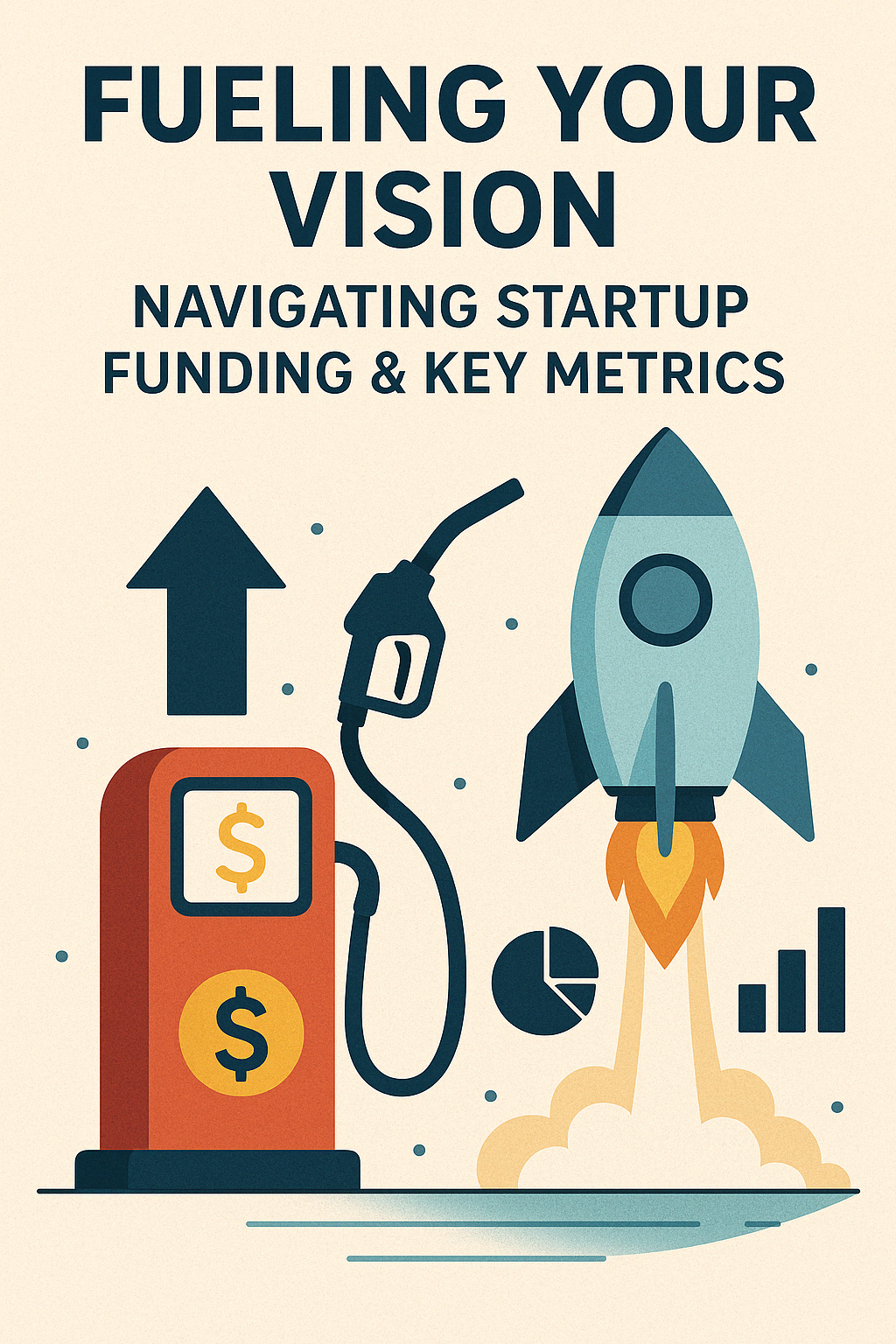
So, you’ve got that brilliant idea, the one that keeps you up at night with its sheer potential. You’re ready to build, to disrupt, to make your mark. But before you dive headfirst into execution, two critical pieces of the puzzle demand your attention: how you’ll fund your dream and how you’ll measure its progress.
Here we break down the essential startup funding strategies and the vital metrics you need to track to stay on the path to success.
The journey of a startup often requires external capital to fuel growth. But where do you even begin? Let’s explore the common funding avenues and their nuances:
What it is: Funding your startup primarily through personal savings and reinvesting any early profits.
Relationship with Entrepreneur: You’re completely independent.
Beyond the Money: Your blood, sweat, and tears are the primary drivers.
Why Choose This? You crave absolute control and want to retain 100% equity. The transfer of funds is quick and simple – straight from your own accounts.
The Catch: Growth and scaling can be significantly restricted by limited capital.
Ideal For: Innovative ideas with the potential to generate early revenue or those who prioritize full ownership above rapid expansion.
What it is: Securing smaller investments from your immediate circle – friends, family, and former colleagues.
Relationship with Entrepreneur: Often based on personal connections.
Beyond the Money: Minimal involvement beyond providing the funds.
Why Choose This? These investors believe in you and your idea. It offers limited interference, leaving you in control.
The Catch: You’ll likely need to gather numerous investors to reach significant funding goals.
Ideal For: Early-stage projects where personal belief and initial validation are key.
What it is: Attracting larger individual investments or a collective investment from industry experts or individuals with recognized credibility.
Relationship with Entrepreneur: More professional, often with industry ties.
Beyond the Money: Invaluable industry-specific expertise and a potentially extensive network.
Why Choose This? You gain social proof and access to crucial industry connections. These investors often look for early exits and rapid funding rounds.
The Catch: Expect larger equity demands for the investment provided.
Ideal For: Early-stage startups, particularly in consumer tech or innovative sectors, where industry knowledge and connections are paramount.
What it is: Securing substantial investments (typically $1 million and up) from professional venture capital firms.
Relationship with Entrepreneur: Strictly professional.
Beyond the Money: Heavy involvement, including strategic guidance and business coaching.
Why Choose This? Access to significant capital and comprehensive support to fuel rapid growth. VCs are driven by the potential for substantial returns.
The Catch: You’ll relinquish a significant degree of control and face pressure to deliver high growth.
Ideal For: High-growth potential ventures with significant research and development needs and a clear path to scalability.
Choosing the Right Path: There’s no one-size-fits-all answer. Your ideal funding strategy depends on your vision, your risk tolerance, your network, and the stage of your startup. Carefully weigh the pros and cons of each option before taking the leap.
If you’re unsure which funding strategy aligns best with your startup vision, contact us for personalized advice and take the next step confidently.
Once you’re funded (or even while you’re bootstrapping), understanding and tracking key metrics is crucial for making informed decisions and demonstrating progress to potential investors. Here’s a breakdown of essential metrics:
These metrics aren’t just numbers on a spreadsheet. They tell a story about your startup’s health, growth trajectory, and customer engagement. Regularly monitor these KPIs to identify trends, understand what’s working (and what’s not), and make data-driven decisions to steer your venture towards success.
If you’re unsure about how to track these key metrics for your startup, get in touch with us and ensure you’re on the right path.
Navigating the world of startup funding and metrics can feel overwhelming, but understanding your options and tracking the right indicators are fundamental to building a sustainable and thriving business. By carefully considering your funding strategy and diligently monitoring your key metrics, you’ll be well-equipped to fuel your vision and navigate the exciting journey ahead. Remember, knowledge is power – use these insights to make informed decisions and turn your startup dream into a reality.